Sanctions licensing is a highly sensitive government and regulatory function. Authorities must review complex applications, assess legal and policy requirements, manage supporting documents, coordinate internal approvals, and maintain a clear record of every decision. However, many sanctions licensing processes still rely on email inboxes, spreadsheets, shared folders, and manual follow-ups. This creates delays, weak visibility, inconsistent documentation, and audit risks. Sanctions licensing digital transformation helps competent authorities move from fragmented manual processing to secure, structured, and auditable case management. Sanctions authorities need more than a digital mailbox. They need a controlled operating environment where every application, document, review, approval, and decision is tracked from submission to closure. A modern sanctions licensing platform centralizes applications, improves document control, automates internal reviews, tracks deadlines, and maintains a complete audit trail. This creates a faster, safer, and more accountable licensing process.
Sanctions licensing applications often involve sensitive financial, commercial, legal, humanitarian, and national security considerations. Each case may require input from multiple departments or institutions before a decision can be issued.
When the process is managed manually, problems appear quickly. Applications may arrive through different email addresses, required documents may be missing, case ownership may be unclear, and officers may work from different document versions. Approvals can become buried in email chains, while managers have limited visibility over deadlines, workloads, and case progress.
For a regulated process, these are not minor administrative issues. They create governance, compliance, and accountability risks.
Email is useful for communication, but it is not designed for regulated case management.
A sanctions licensing case may include application forms, supporting evidence, internal comments, legal assessments, review notes, approval decisions, and applicant correspondence. When these elements are spread across inboxes and attachments, it becomes difficult to maintain control.
Important correspondence can be missed. Sensitive information may be forwarded outside controlled channels. Decision history may be incomplete, and case status may depend on individual staff knowledge rather than a reliable system record.
A process that depends on personal inboxes is difficult to scale, monitor, and audit.
Digital sanctions licensing replaces disconnected manual steps with a structured platform designed around the full lifecycle of a licensing application.
Instead of treating each request as an email thread, the authority manages each request as a controlled case. The process typically begins with online application submission through a secure portal. Required documents are uploaded and linked to the case, while mandatory fields and validation rules help improve data quality from the start.
Once submitted, the platform creates a case record, assigns it to the correct officers, routes it through the relevant review stages, records internal comments, manages approvals, and stores the final decision. Every action is captured in the system, making the process more transparent and easier to audit.
A centralized case management system gives authorized users a complete view of each application. Instead of searching through emails, folders, and spreadsheets, officers can access applicant details, application type, relevant sanctions regime, documents, review history, approval status, and final decisions from one secure environment.
This reduces fragmentation and improves operational visibility.
Structured digital forms help authorities collect complete and consistent information from the beginning. Applicants can be guided to provide identity details, beneficial ownership information, transaction details, counterparties, sanctions regime references, supporting documents, and the purpose of the request.
Better intake reduces incomplete submissions and limits unnecessary back-and-forth communication.
Regulatory workflow automation ensures that each case follows the correct review path based on application type, risk level, internal policy, and approval requirements.
The platform can assign tasks, monitor deadlines, route cases for legal or policy review, escalate overdue items, and notify users when action is required. This improves consistency and reduces dependence on manual follow-up.
Sanctions licensing cases often contain sensitive commercial, legal, and financial information. A digital platform must protect documents while ensuring that authorized users can access them when needed.
Secure document management supports controlled upload, role-based access, version control, centralized storage, retention rules, and access history. This reduces the risks associated with email attachments and local file storage.
An audit trail for sanctions processes is essential. Authorities must be able to demonstrate how each case was handled, who reviewed it, what evidence was considered, and how the decision was reached.
A complete audit trail records submission times, document updates, case status changes, internal comments, review actions, approval decisions, applicant communication, and final decision issuance. This strengthens transparency, accountability, and institutional memory.
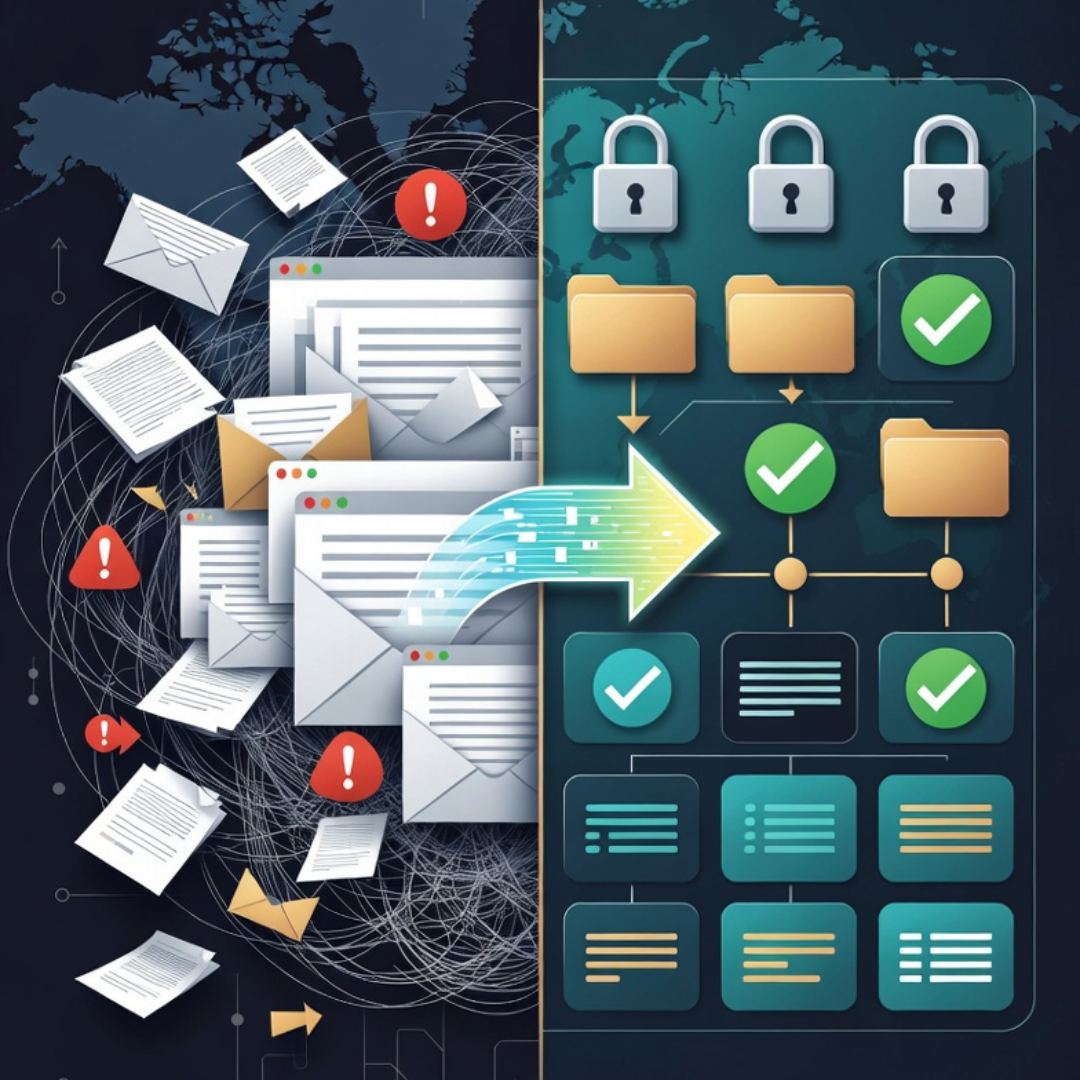
Under an email-based model, a licensing request arrives with multiple attachments. Staff manually save files, enter details into a spreadsheet, forward documents to reviewers, track comments by email, and prepare the decision manually. The process is slow, difficult to monitor, and hard to audit.
With a digital case workflow, the applicant submits a structured request through a secure portal. The system validates required information, creates a case, assigns tasks, routes reviews, records comments, tracks approvals, and stores the final decision.
The result is a process that is faster, clearer, and fully traceable.
Sanctions licensing digital transformation delivers value across operations, management, and governance.
Operational teams benefit from faster application processing, fewer manual tasks, better document handling, and clearer applicant communication. Management gains stronger visibility over workloads, bottlenecks, processing times, and pending cases.
From a governance perspective, the authority benefits from more consistent decision-making, clearer approval history, stronger audit readiness, and reduced reliance on individual inboxes. This is especially important where licensing decisions may be reviewed internally, externally, or by oversight bodies.
Generic workflow tools can help with simple approvals, but sanctions licensing requires more specialized capabilities.
Authorities need a system that can support sensitive case data, complex approval structures, legal and regulatory classifications, controlled document access, detailed audit logs, applicant communication, long-term reporting, and secure integration with existing systems.
For regulated sanctions processes, workflow automation must be designed around compliance, governance, and security from the beginning.
Before implementing a digital sanctions licensing platform, authorities should define the operating model clearly.
This includes identifying the types of licensing applications received, the sanctions regimes that must be supported, the information applicants must provide, the departments involved in review, the approval levels required, and the reports needed by management.
Authorities should also define document retention rules, audit requirements, access controls, and integration needs. A successful implementation depends on aligning technology with the legal framework, internal procedures, and operational requirements.
IntelliSYS specializes in secure digital transformation for government, regulatory, compliance, and financial intelligence environments.
For sanctions licensing modernization, IntelliSYS can support authorities with digital application intake, secure case management, workflow automation, document management, audit trail design, reporting dashboards, role-based access control, integration with existing platforms, user training, and operational support.
The objective is to replace fragmented manual processing with a secure, auditable, and efficient sanctions licensing workflow tailored to the authority’s requirements.
Sanctions licensing requires accuracy, transparency, and strong control over sensitive information. Email-based processes are no longer sufficient for authorities that need consistent workflows, reliable reporting, and complete auditability.
Sanctions licensing digital transformation enables competent authorities to modernize application intake, case management, internal review, approvals, reporting, and audit controls.
If your organization is planning to modernize sanctions licensing, compliance workflows, or regulated case management processes, IntelliSYS can help design and implement a secure digital solution tailored to your operational needs.
Contact IntelliSYS to discuss your sanctions licensing digital transformation project or request a consultation.